Tree Removal
A tree removal service is the process of safely and completely removing a tree from a property, including cleanup and hauling away debris. The work is performed by trained arborists who use specialized equipment to prevent property damage and ensure safety.
The tree removal process:
- Consultation and assessment: A certified arborist inspects the tree to evaluate its health, size, and proximity to structures and utility lines. This assessment determines the safest removal method.
- Safety preparation: The crew marks off a drop zone, protects nearby landscaping or structures, and prepares specialized equipment, such as chainsaws, bucket trucks, or cranes.
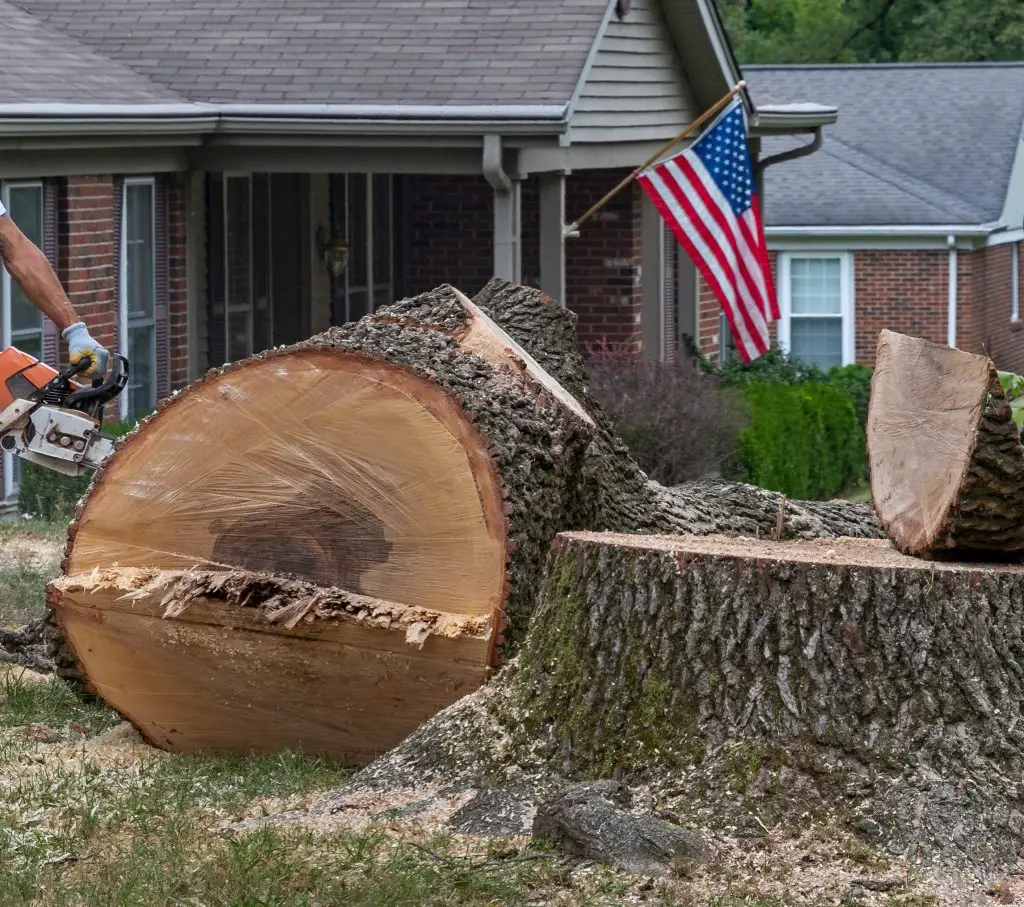
- Cutting and dismantling: Depending on the tree and its location, the crew will either fell the tree in a single direction or, more commonly, use a top-down approach. In the latter method, workers climb the tree to cut and lower it in manageable sections using ropes and rigging. For very large or difficult-to-reach trees, a crane may be used to lift and carry away each section.
- Ground processing: On the ground, the larger sections of the tree trunk are cut into logs, and smaller branches are fed through a wood chipper.
- Cleanup and hauling: All wood, branches, and debris are hauled away. The site is raked and swept to ensure it is clean and hazard-free.
- Stump removal (optional): A stump can be left as-is, but most services offer an additional service of grinding the stump down to or below ground level. This eliminates the tripping hazard and allows for new landscaping.
Reasons to hire a tree removal service:
- Safety hazard: Trees that are leaning, have broken or dead branches, or show signs of root damage or structural weakness pose a risk to people and property.
- Disease or death: A tree that is dead or severely diseased may need to be removed to prevent the illness from spreading to other trees.
- Proximity to structures: Trees or root systems too close to a house, driveway, or power lines can cause significant damage and should be removed.
- Storm damage: Heavy winds or snow can damage a tree beyond repair, requiring emergency removal.
- Landscape improvements: A tree may be removed to clear land for new construction, add more sunlight to a yard, or improve the property’s overall appearance.
Factors that influence cost:
The cost of a tree removal service can vary widely based on several factors:
- Tree size: Larger and taller trees require more time, labor, and equipment to remove, which increases the price.
- Location and accessibility: Trees in hard-to-reach locations or near buildings, fences, or power lines require more complex removal techniques and can increase the cost by 25% or more.
- Tree condition: Removing a tree with severe decay or structural damage is riskier and requires more specialized techniques, which adds to the price.
- Emergency service: A rush job in response to an emergency, such as a storm-damaged tree, will cost significantly more.
- Additional services: Optional services, such as stump grinding, debris hauling, and log splitting, add to the total cost.
- Tree type: The species of tree matters because some hardwoods are denser and more difficult to cut than softwoods.